
Acrylic vs Polycarbonate Comparison Guide
Acrylic and polycarbonate sheeting have a number of differing characteristics. These two types of plastics are oftentimes compared to one another because they are similar in appearance and the most frequently utilized see-through plastic materials on the market. Both have benefits and drawbacks. Generally speaking, acrylic sheeting is shinier and polycarbonate sheet is stronger. Acrylic and polycarbonate both weigh less than half of what a comparably sized piece of glass weighs yet they are both much stronger than glass. Both materials are also very easy to clean.
Below, we break down the pros and cons of each and provide some common acrylic applications for each type of plastic.
But before we compare and contrast polycarbonate and acrylic sheeting in detail, let’s identify some well-known features that are unique to each material.
Acrylic Plastic
Acrylic is marketed under many trademark names such as Plexiglas, Lucite, Perspex, Policril, Gavrieli, Vitroflex, Limacryl, R-Cast, Per-Clax, Plazcryl, Acrylex, Acrylite, Acrylplast, Altuglas, Polycast, Oroglass, Optix. In particular, “Plexiglas” is used almost interchangeably with “acrylic plastic.” While each trademark product may have slightly different characteristics, they each form an acrylic plastic.
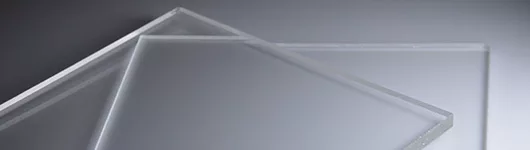
Acrylic plastic properties include:
- Less expensive than glass and polycarbonate
- 17x the impact resistance of glass
- 92% light transmittance in all thicknesses (better clarity than glass)
- Insusceptible to yellowing or discoloration from the sun
- Thermoplastic with a working temp of 180F continuous
- Durable against scratches and dents
- Sheets can be polished smooth
- Easy to cut
- Heat bent
- Clean glue joints
- Shiny surface
- Large variety of colors available
- Widths from 48” to 108”
- Lengths from 72” to 192”
- Recyclable
Polycarbonate Plastic
Polycarbonate is sometimes called Lexan (trademarked name by GE Plastics) or Makrolon. One of the biggest differences between acrylic and polycarbonate is the cost. Polycarbonate sheets can cost on average about 35% more than acrylic.
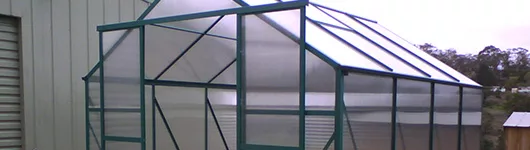
Polycarbonate plastic qualities include:
- 250x the impact resistance of glass and 30x stronger than acrylic
- Bullet resistant grades are available
- 88% light transmittance
- Less rigid and available in a variety of flexible grades
- Thermoplastic with a working temp of 240F continuous
- Low level of flammability
- Durable against chips and cracks
- Highly resistant to acids and other chemicals such as gasoline
- Sheets can be drilled without worry of cracking
- Cold formed or bent without heating
- Widthes from 38” to 75”
- Lengths from 78” to 150”
Now that you’ve had a quick look at the key differences between acrylic and polycarbonate, let’s take the time to understand why each material possesses these special properties and capabilities. The obvious place to start is the chemical structures and raw materials that make up these incredible plastics.
What Are Acrylic and Polycarbonate Sheets Made Of?
Polycarbonate and acrylic plastic are both polymers. A polymer is simply a material made up of different molecules that are linked together in long chains. As a result, polycarbonate and acrylic look, feel and act differently due to the specific kinds of molecules they’re made up of and how they’re put together. This overall creation process is known as polymerization.
Without getting too bogged down by the technical details, polycarbonate is produced by the reaction between bisphenol A and phosgene COCl2. On the other hand, acrylic is made by synthesizing methyl methacrylate. Methyl methacrylate is typically created by reacting acetone with sodium cyanide to produce acetone cyanohydrin. This is then reacted with methyl alcohol to finally produce methyl methacrylate.
These are the most common methods for creating these polymers. However, there are a variety of ways that polycarbonate and acrylic can be formed, especially when creating plastic sheets with special qualities such as color, non-glare, anti-static, UV-filtering, and more.
How Are Acrylic Plastic Sheets Manufactured?
Using a process known as bulk polymerization, the monomer (methyl methacrylate) and the catalyst (typically organic peroxide) are poured into a mold, which is sealed and heated to produce the reaction that forms the acrylic plastic polymer. The molded acrylic sheets are then cured. Thinner acrylic sheets can be cured in 10 to 12 hours, but thicker sheets may require several days of cure time. The molds are then cooled, opened, and the resulting acrylic plastic sheets are either immediately used or further processed to improve the overall quality of the final product.
Batch cell and continuous bulk polymerization are the two methods used to create acrylic plastic sheets.
Batch cell is the most common form of bulk polymerization because it is effective at making acrylic sheets in thicknesses from 0.06 to 6.0 inches and widths from 3 feet to several hundred feet.
The continuous method of bulk polymerization is quicker and less labor intensive because this method is specifically used for creating acrylic plastic sheets with thinner thicknesses and smaller widths than batch cell can produce.
How Are Polycarbonate Sheets Made?
Polycarbonate can be processed and manufactured in a wide variety of ways, such as extrusion, injection molding, blow molding, thermoforming, and more. When it comes to producing polycarbonate sheets, however, the extrusion manufacturing process is most commonly utilized.
To begin the process, raw resin (polycarbonate pellets) is fed into an extruder and melted to the desired temperature. The melted polycarbonate material is then forced through a die that is shaped to produce flat sheets of various lengths, widths, and thicknesses with uniform cross-sections. During this process, the polycarbonate sheet can be produced with colors, high or low glosses, smooth or textured surfaces, and in single or multiple layers.
Once the polycarbonate sheets have been fabricated through the extrusion process, they can be further processed to achieve the desired final product.
Types of Acrylic and Polycarbonate Plastic Sheets
The unique physical properties and manufacturing process of each plastic allows sheeting to be produced in a variety of forms specifically designed to fulfill both broad and narrow applications. Here are the different types of polycarbonate and acrylic sheeting available:
Types of Plastic Sheeting:
| Acrylic | Polycarbonate |
| Clear | Clear |
| Colored & Flourescent | Colored |
| Light Diffusing | Tinted |
| Mirrored | Mirrored |
| Bullet Resistant | Bulletproof |
| Abrasion-Resistant | Abrasion-Resistant |
| Block | Flame Retardant |
| Black & White | FDA Approved |
| UV Filtering & Transmitting | Multiwall |
| Anti-Static & Non-Glare | Anti-Static |
Polycarbonate and acrylic share many of the same types of plastic sheeting options like clear, colored, mirrored, and more. While the form may be the same, you will find that a clear polycarbonate sheet and a clear acrylic sheet are vastly different due to the physical and chemical properties of the plastic. Choosing one over the other depends entirely on the specifics of your application.
If you are interested in clarity and light transmittance, acrylic sheets will outperform polycarbonate sheets. On the other hand, if you are looking for high impact resistance, polycarbonate sheeting is the obvious choice. Even though each plastic can share the same form, they will function very differently.
Uses for Acrylic and Polycarbonate Plastic
Acrylic and polycarbonate are very useful plastics with a wide variety of properties. As a result, both plastics are used in a number of applications across a range of industries. Here are some common applications:
Types of Plastic Sheeting:
| Acrylic | Polycarbonate |
| Furniture | Safety and vandal-resistant windows |
| Signage | Windshields (automotive, boat, and RV) |
| Accent Walls | Skylights |
| Point-of-purchase displays | Outdoor Signs |
| Light covers | Diffusers and light pipes for LEDs |
| Interior layer of storm acrylic window linings | Machinery Guards |
| Residential and commercial aquariums | Electronic Components |
| Animal and reptile enclosures | Construction materials |
| Spectator protection for ice hockey rinks | Data Storage |
| Police vehicles for riot control | Reusable drinking bottles |
| Medical technologies and implants | Football and hockey helmet visors |
The list could go on!
Have questions about acrylic or polycarbonate? Contact us today and we will be happy to help you. Also, be sure to check out our complete acrylic and polycarbonate product lines.
Why Choose A&C Plastics?
Our commitment to order accuracy and customer service will help you get exactly what you need right when you need it.
You can count on us to help you get the job done.

Every Color Imaginable
We have more than 200 different colors of acrylic sheets in our warehouse and our expert staff is always ready to help.
learn more
Oversized Sheets
Big projects call for big materials. Our warehouse is home to some of the largest sheets in the plastics industry.
learn more
No Project Too Large or Too Small
We work hard to meet your expectations on every level. Let A&C Plastics deliver for you.
learn more
Custom Cutting Capabilities
We can perform cut-to-size orders with tight tolerances of 1/32 inch.
learn more
Questions? Contact Our Experts Today
Our team is here to help you. If we don't have what you need in-stock or in the options you need, our plastic experts will find it!
Give us a call, or fill out the form and one of our experts will be in touch soon!
